
Design and implementation of a Pay-as-you-go solar kit system for rural areas
Project Summary
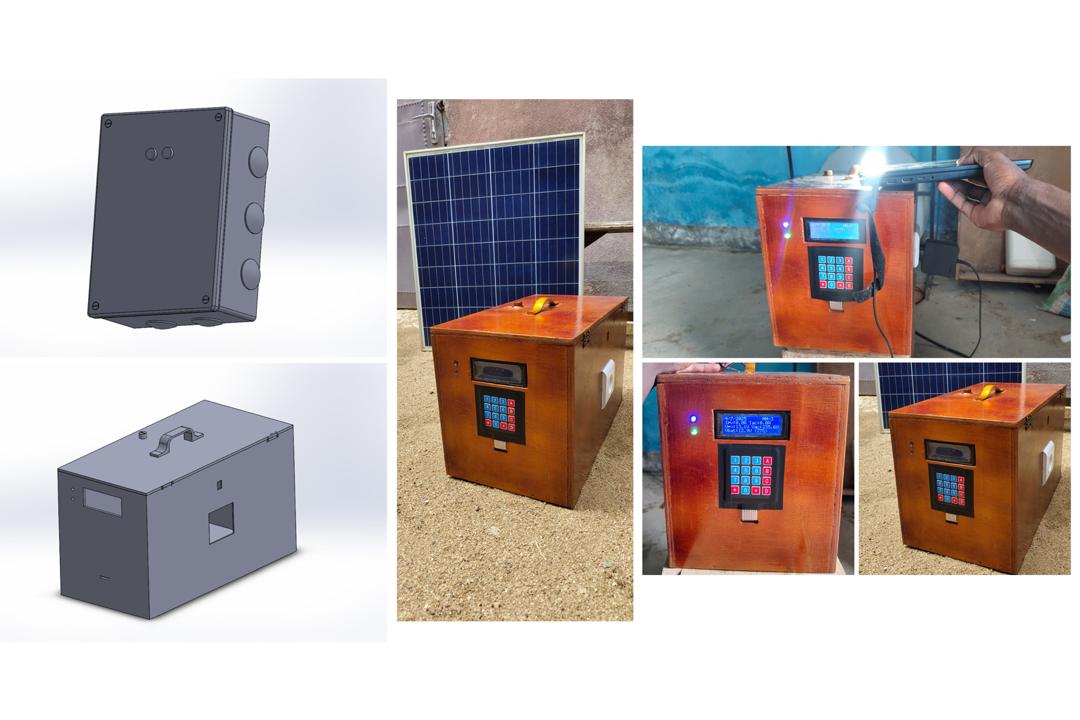
Project Description
The project developed a pay-as-you-go solar kit designed specifically for rural and peri-urban communities in Cameroon, where limited electricity access and unreliable internet connectivity make many existing solar solutions difficult to deploy. The system combines solar technology with Arduino, GSM and IoT, allowing users to activate their kit locally or by SMS and pay only for the period they wish to use it. It relies on the GSM network rather than the internet making it well suited to remote areas. An integrated monitoring system tracks battery status, power consumption, temperature, humidity and location in real time. Data can be accessed through a local display, a web dashboard or SMS, and is stored locally to support maintenance and detect tampering. These features help reduce unpaid bills, improve after-sales service and make large-scale management of distributed solar systems easier.
Although the project has ben operational for less than a year, it has already demonstrated its technical feasibility through a functional prototype. Development costs totalled approximately US$327, covering research, electronic components, the solar kit and logistics. The work has been entirely financed through personal savings, family support and freelance income. The next stage is to refine the design by miniaturizing the electronics onto a single printed circuit board, improving security features, sourcing cost-effective components and securing funding for commercialization. The ultimate goal is to manufacture affordable, locally designed PAYGO solar kits that can electrify more than 500,000 households over the next decade, while creating local jobs and reducing reliance on kerosene lamps and diesel generators.
Coordinators: Hadiza Abdulmumini, Cataleya Han
Disclaimer:
All content on this project page is the intellectual property of the respective project owner(s). Reproduction, duplication, or use of any part of this project without the explicit consent of the project owner is not permitted.